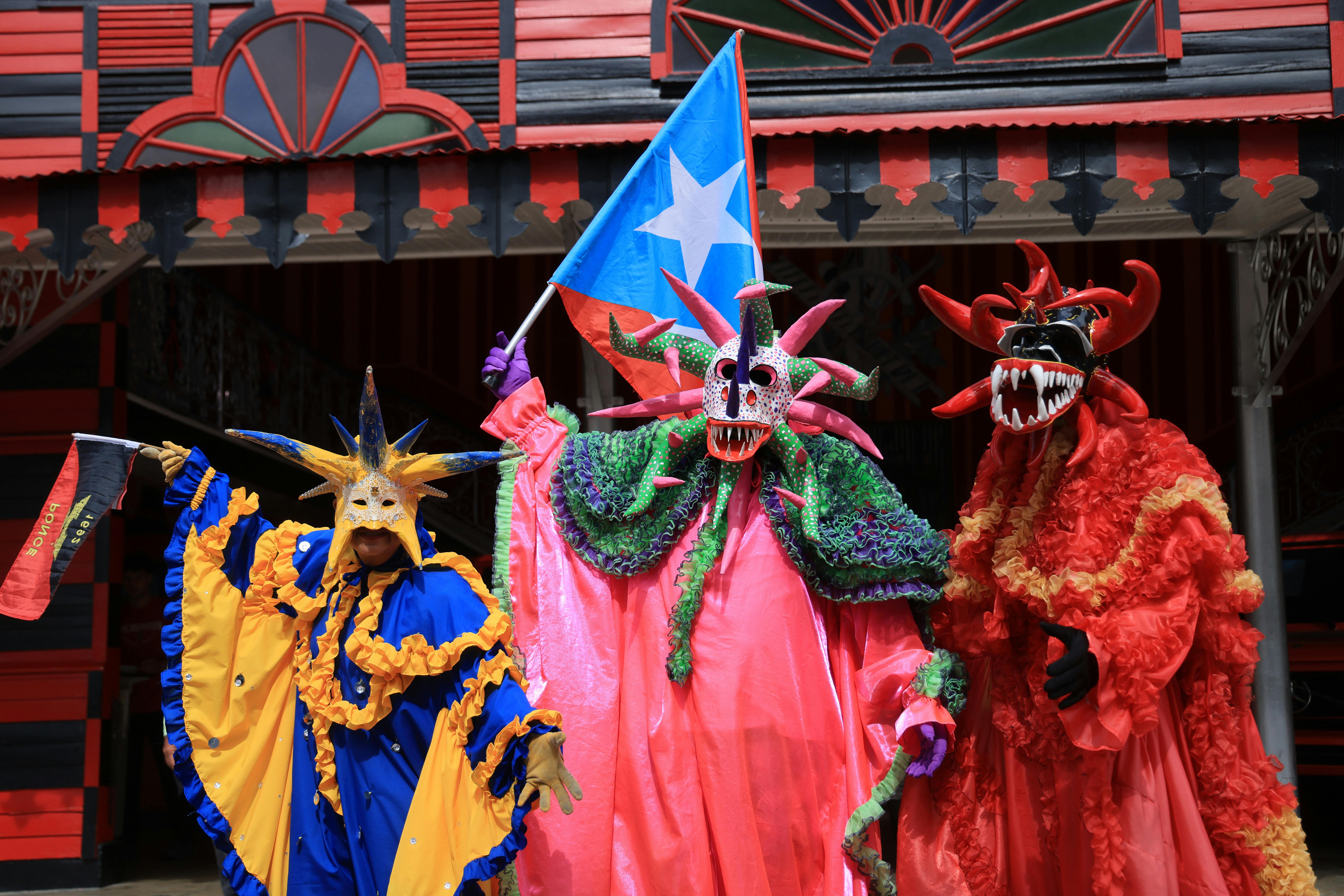
A vejigante (pronounced beh-hee-GAHN-te) is a colorful, mischievous folkloric character central to Puerto Rican cultural festivals, particularly carnivals and religious celebrations. It represents a blend of Spanish, African, and Taíno indigenous influences, symbolizing resilience, identity, and cultural fusion in Puerto Rico.
History & Origins
The term “vejigante” comes from the Spanish words vejiga (cow bladder) and gigante (giant), referring to the inflated cow bladder traditionally carried as a playful “weapon” to lightly tap spectators.
Its roots trace back to medieval Spain, where similar figures represented demons or Moors defeated by Saint James (Santiago Apóstol) in legends like the Battle of Clavijo. These characters scared people into religious observance.
In Puerto Rico, the tradition evolved during colonial times, incorporating African rhythms (like bomba and plena) and Taíno mask-making techniques, transforming it into a joyful, symbolic figure rather than purely frightening.
Regional Mask Styles
Vejigantes wear elaborate, brightly colored outfits with bat-like wings on loose jumpsuits. The most iconic part is the mask (careta), featuring multiple horns, bulging eyes, sharp fangs, and exaggerated scary-yet-whimsical expressions. There are two regional variations:
- In Ponce (southern Puerto Rico) → masks are typically papier-mâché, often in vibrant multicolors. (see fig 1)
- In Loíza (northern Puerto Rico) → masks are made from coconut shells with simpler, more traditional designs. (see fig 2)


Authentic Vejigante Experiences
During festivals, vejigantes dance energetically, howl, and interact playfully with crowds using their bladders (now often replaced with balloons). Today, vejigantes appear mainly in:
- The Carnaval Ponceño in Ponce (February, one of the oldest carnivals in the Americas).
- The Fiestas de Santiago Apóstol in Loíza (July).
- Other events like those in Hatillo.
They have become a beloved symbol of Puerto Rican heritage, often seen as representing triumph over adversity. The masks are considered fine folk art, displayed in museums (e.g., Smithsonian) and homes.
